Peace Pine
From Head of Homestead Park, Kate Wilkinson
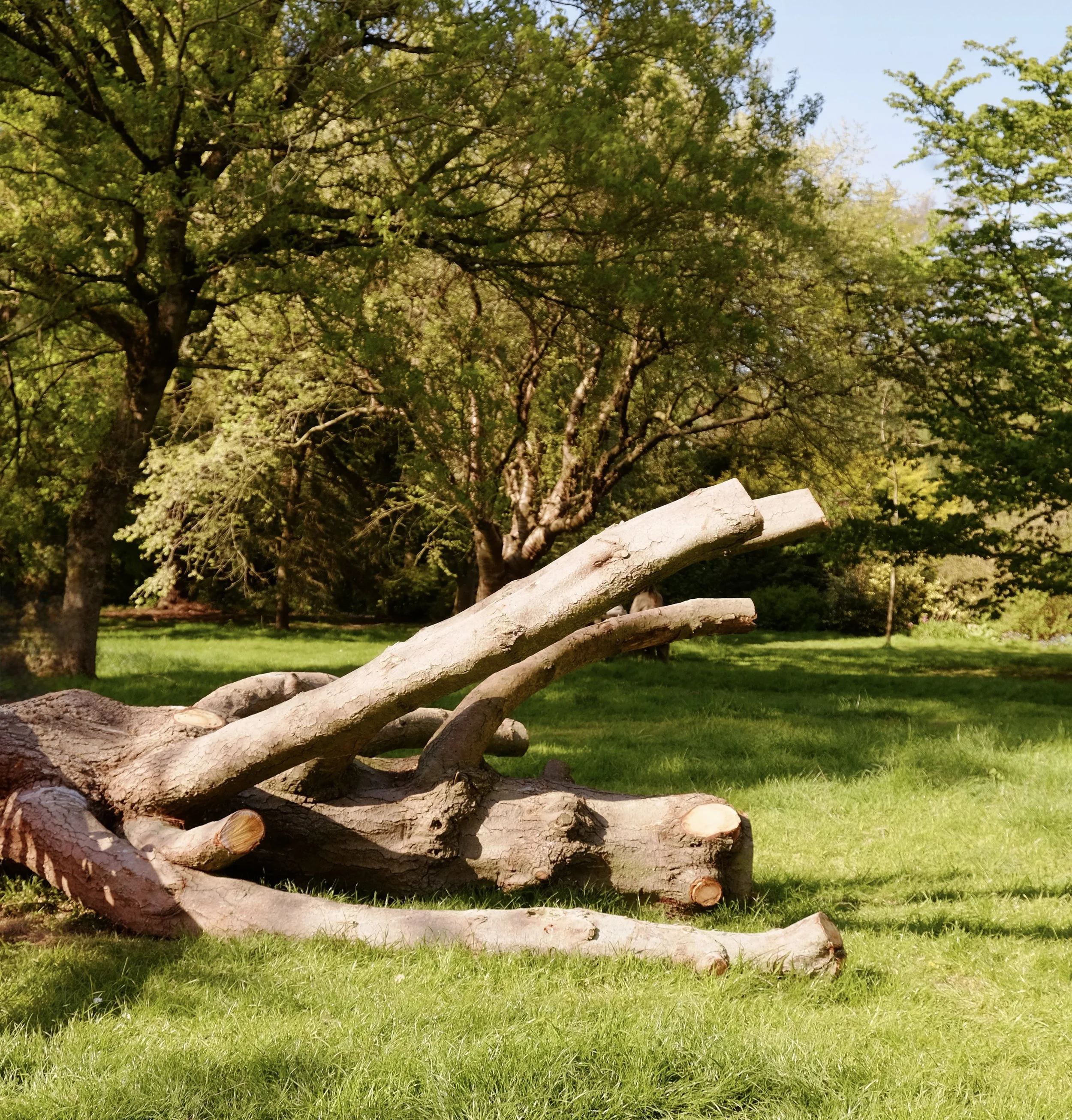
In the Easter storm of 2026, the large Pinus strobus at the top of the meadow was blown down. If you visit the park today, you will see its broken root plate and a big section of its branching trunk lying in the grass.
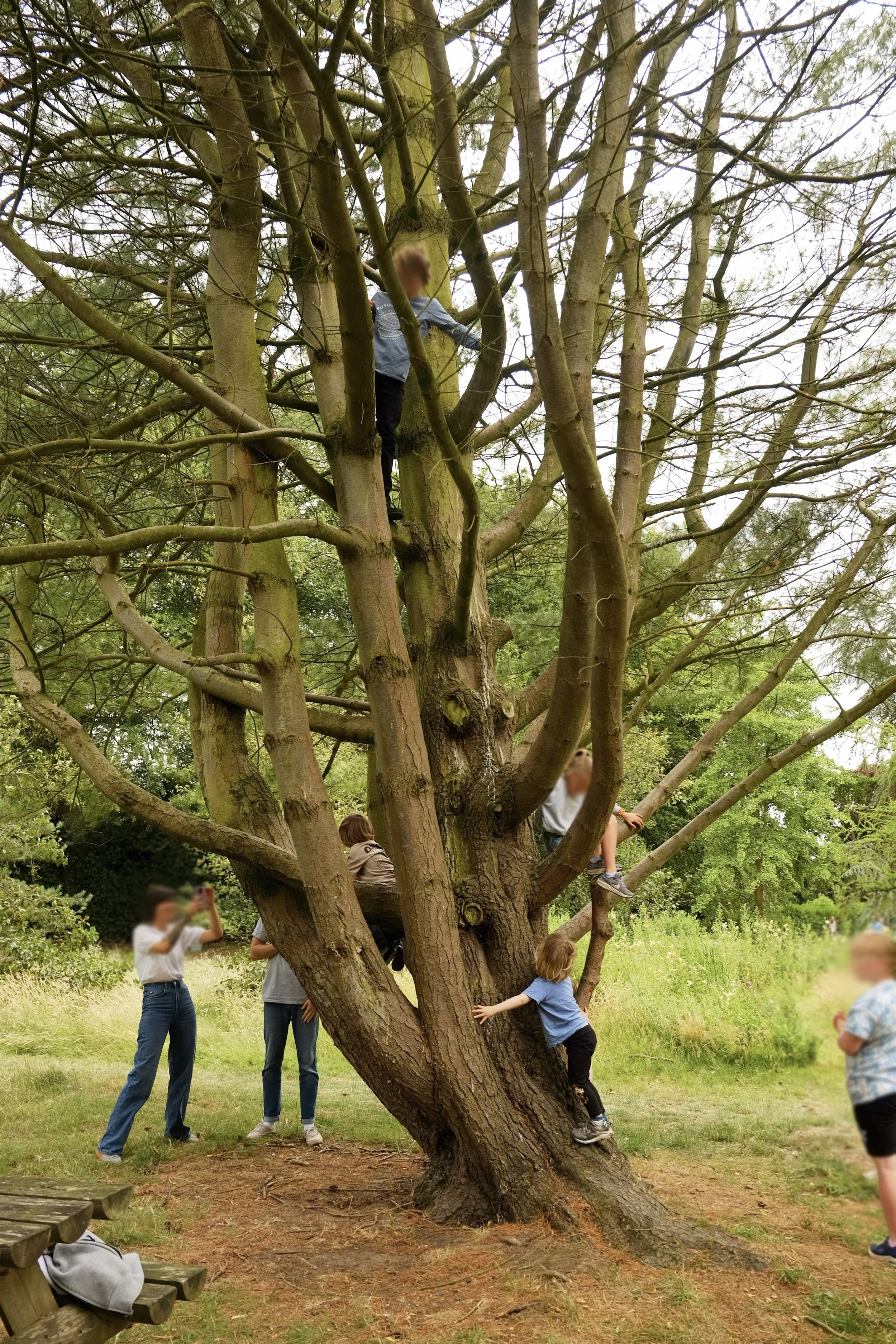
This was a much-loved tree and many people have special and very personal memories of it. Children (and a handful of adults) loved climbing it. It gave us shade and was a perfect spot for a picnic. When we lose such a tree, it feels like there are multiple points of sadness, large and small, all coming together.
This particular tree also carried a weight of symbolism, being a tree native to North Eastern America and having special significance for many indigenous peoples from that land. In its homeland, it is known as the Tree of Peace.
I've been thinking a lot about how the park can be a resource to people who are feeling and managing loss. Losses of all kinds - ecological loss, personal loss, loss of loved ones, of opportunities, loss of connection. Many people chose to memorialise their loved ones here. And people come to the park when they are sad and grieving.
As a garden team, we’ve decided to keep this tree in an "obvious fallen state". In other words, we won’t grind the stump or cut up what remains of the trunk. We are deciding not to hide away what has happened. At the same time, we are going to “take care” of it, in the same way as we care for every part of the park.
As the root plate lifted, it left a large cavity. We will fill in the hole, making a sort of hump - like a tumulus, with smooth slopes. A tumulus or “barrow” is a mound of stones and earth, marking a grave. They are found across the world, in every culture - the oldest ones are thousands of years old. Making mounds like this seems to be a deeply human thing to do.
We will do this with pieces of timber, chippings, stones, and then layer turf over it. In a way, we are performing a "burial" for this beloved tree.
We’d also like to invite you to keep visiting this tree. Maybe use it as an opportunity to acknowledge your own losses, and the future losses you may fear. Being in the park, with all its life and colour and peacefulness will help you to bear what you are feeling. We know this from experience.
Over time, the trunk will decay and the mound will sink, as life re-colonises the timber. Complex communities of fungi and mosses, beetles and other detritivores will move in, and slowly they will recycle the nutrients and materials of the tree. It will become rich soil for new generations. It will become part of the whole ecosystem. Part of everything.
We hope that in the long term, this tree can continue to be a place of remembering and acknowledging loss. And yes.. of course, you are still welcome to climb on it.